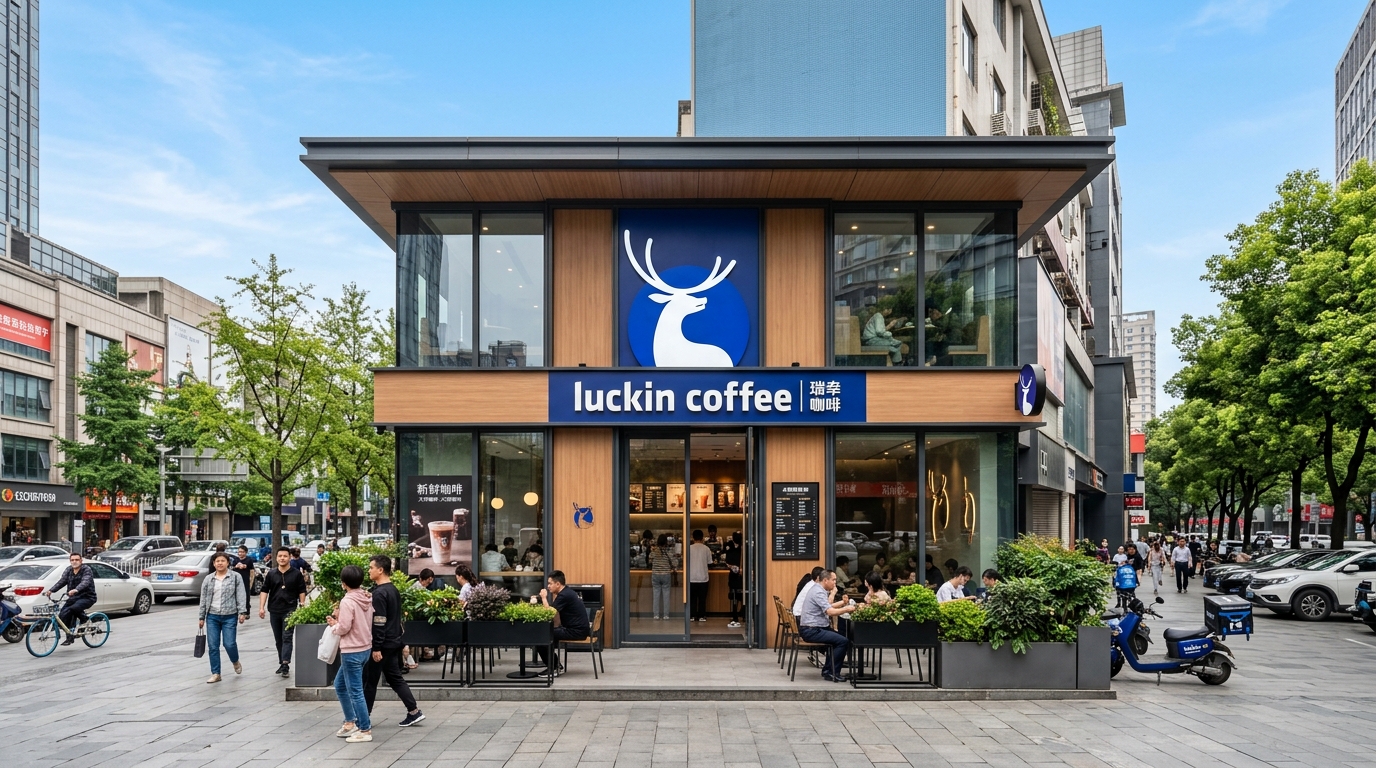
Luckin Coffee has officially surpassed 25,000 active storefronts in China by mid-2026, solidifying its position as the country’s dominant coffee brand. This expansion places Luckin far ahead of its primary international competitor, Starbucks, which operates roughly 7,500 outlets in China. The milestone signals a permanent structural shift in China’s coffee market toward Luckin’s low-overhead, mobile-first, grab-and-go storefront architecture.
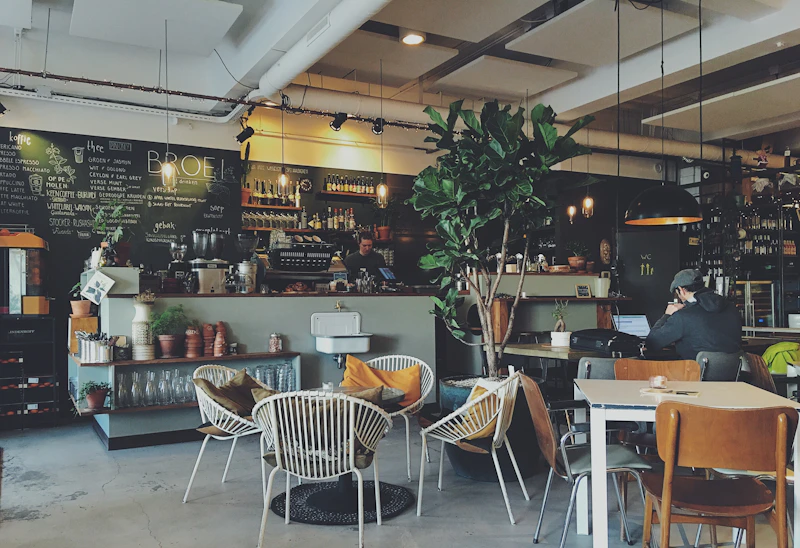
Luckin’s business strategy relies on extreme operational efficiency. By eliminating large seating layouts and focusing strictly on small, app-driven pickup kiosks, Luckin reduced capital expenditure and real estate overhead. This structure allows the brand to maintain high profitability while offering promotional prices of 9.9 RMB (approximately $1.40 USD) per cup. Orders are processed entirely through the mobile app, creating a frictionless user experience and compiling customer data for localized marketing.
In addition to its digital-first pipeline, Luckin’s product localization has been a key driver of growth. The brand popularized tea-and-coffee hybrid beverages, such as its signature “Raw Coconut Latte” and high-profile collaborations with traditional Chinese liquor brand Moutai. These localized flavor combinations appeal to younger consumers who favor sweeter, milk-based specialty drinks over traditional black coffees, forcing competitors like Starbucks to constantly adjust their menus.
For global beverage brands, Luckin’s milestone proves that combining offline retail with digital supply chain automation allows for unmatched scalability. Luckin is now leveraging this automated model to expand into Southeast Asian markets like Singapore, driving a global shift toward high-velocity, tech-enabled value coffee formats.