The seismic shifts initiated by Artificial Intelligence within the software development landscape—a transformation WIRED aptly captured with ‘AI Conquered Coding’—are not isolated. They represent a precursor to a far broader revolution, one that is now accelerating its trajectory directly into the heart of the global food and beverage industry. Specifically, fast food, with its inherent demand for speed, consistency, and scale, stands as AI’s next undeniable frontier. For discerning F&B executives and strategic investors, this isn’t merely a technological trend; it’s a critical inflection point demanding immediate, proactive engagement and robust strategic realignment.
The underlying thesis is clear: the operational efficiencies, predictive capabilities, and personalized experiences that AI has demonstrated in complex digital domains are now poised to redefine every facet of QSR (Quick Service Restaurant) operations. From the drive-thru lane to the back-of-house, from inventory management to personalized customer engagement, AI offers a blueprint for exponential scaling and unprecedented profitability. The question is no longer if, but how rapidly and strategically F&B enterprises will integrate these disruptive technologies to secure their competitive edge in an increasingly automated future.
The AI-Powered Operational Renaissance in QSR
The traditional fast-food model, while optimized for speed, still grapples with inefficiencies inherent to manual processes: labor variability, inventory spoilage, and inconsistent order fulfillment. AI is fundamentally re-engineering this paradigm. Imagine a future, rapidly becoming a present reality, where every operational node is intelligently optimized.
Automated Order Ecosystems: Voice AI, leveraging advanced natural language processing (NLP), is already taking orders with remarkable accuracy at drive-thrus, reducing errors and increasing throughput during peak hours. Interactive kiosks, augmented with AI-driven menu suggestions based on time of day, weather, or even previous purchase history, are enhancing average check size and customer satisfaction. This isn’t just about reducing human interaction; it’s about creating a frictionless, hyper-efficient ordering journey that scales seamlessly across hundreds or thousands of locations.
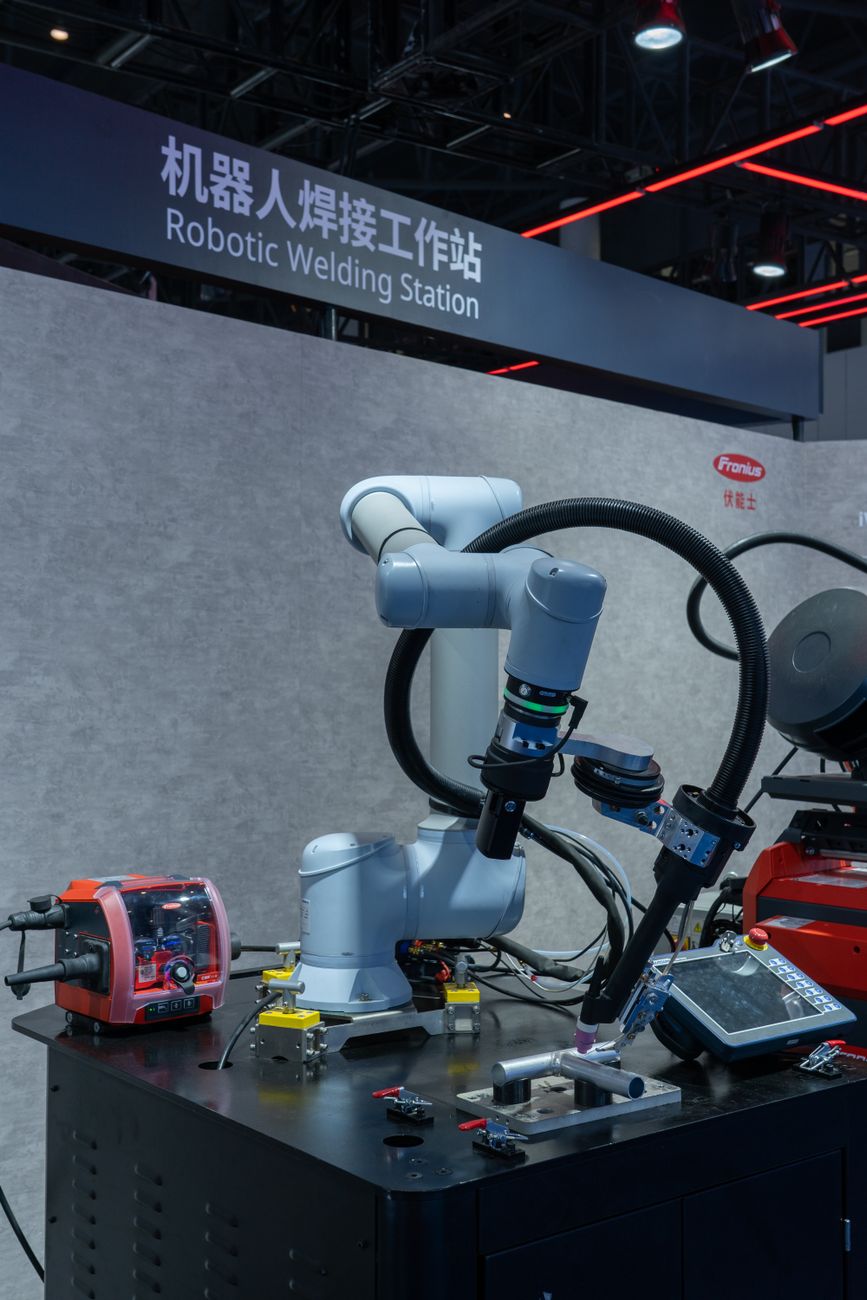
Intelligent Kitchens and Robotics: The kitchen, long the sanctum of human skill, is undergoing a profound transformation. Robotic fryers ensure perfect crispness every time, automated burger flippers maintain consistent quality, and collaborative robots (cobots) are beginning to assist with intricate assembly tasks. These systems don’t just work tirelessly; they learn. Machine learning algorithms analyze cooking times, ingredient variances, and demand fluctuations to continuously optimize output, minimize waste, and guarantee product consistency—a cornerstone of fast-food brand integrity that is notoriously difficult to maintain manually across vast franchises. The precision and repeatability offered by AI-powered robotics unlock unprecedented levels of quality control and operational predictability.
Predictive Analytics for Peak Performance: Beyond the visible automation, AI’s analytical prowess is revolutionizing back-of-house management. Advanced algorithms process vast datasets—historical sales, local events, weather patterns, supply chain dynamics—to predict demand with unparalleled accuracy. This intelligence translates into optimized inventory levels, minimizing spoilage and stockouts, and precisely calibrated staffing schedules, reducing labor costs while ensuring adequate service levels. This data-driven decision-making represents a fundamental shift from reactive management to proactive, hyper-optimized operational orchestration.
Elevating the Customer Journey Through Hyper-Personalization
In a saturated market, differentiation hinges on the customer experience. AI empowers fast-food brands to move beyond generic service to deliver highly personalized, memorable interactions that foster loyalty and drive repeat business.
Dynamic Menu Personalization: AI can analyze individual customer preferences, dietary restrictions, and historical purchasing behavior to offer tailored menu recommendations at the point of sale. This isn’t just upselling; it’s about anticipating needs and creating a bespoke ordering experience that feels intuitive and value-driven. Imagine an AI suggesting your favorite combo just as you approach the drive-thru, or offering a new item based on your past likes—this level of anticipatory service builds profound customer relationships.
Seamless Digital Integration: Mobile apps, powered by AI, offer predictive ordering, loyalty program optimization, and intelligent customer support. Chatbots can handle routine queries, resolve issues quickly, and even guide customers through complex orders, freeing human staff to focus on higher-value interactions. The goal is a unified, frictionless digital and physical experience that makes every customer feel understood and valued.
The Evolving Workforce: A Strategic Reimagining
The rise of AI in fast food sparks crucial discussions about the future of employment. However, a Silicon Valley mindset views this not as job elimination, but as job evolution—a strategic re-engineering of the human-AI interface. Repetitive, physically demanding, or routine tasks are ideal candidates for automation, freeing human capital to pivot towards roles requiring critical thinking, complex problem-solving, empathy, and creative engagement.
Future fast-food roles will increasingly focus on supervising AI systems, maintaining robotic equipment, managing complex data insights, and, crucially, delivering the nuanced, high-touch customer service that only humans can provide. This necessitates strategic investment in upskilling and reskilling initiatives, transforming existing workforces into valuable human-AI collaborators. Enterprises that embrace this transition will cultivate a more engaged, higher-skilled workforce capable of driving innovation and navigating a technologically advanced operational landscape.
Unlocking Unprecedented Scaling and Market Disruption
For high-growth F&B startups and established chains alike, AI represents the ultimate scaling accelerator. The ability to replicate highly optimized, consistent, and efficient operations across thousands of locations—with minimal variability and maximum control—is a game-changer.
Standardized Excellence at Scale: AI-driven systems ensure that a burger made in New York is virtually identical in quality and efficiency to one made in Los Angeles. This level of standardization is foundational for rapid, profitable franchise expansion and brand consistency. It de-risks growth by embedding operational excellence directly into the technology stack.
New Business Models: AI facilitates the emergence of hyper-efficient ghost kitchens, optimized for delivery and leveraging automation to fulfill vast order volumes with minimal human intervention. It enables dynamic pricing strategies and personalized promotions that can be deployed at scale, responding in real-time to market conditions and competitive pressures. For innovators, AI is the engine for market disruption and the capture of new segments.
Navigating the AI Inflection Point: Challenges and Strategic Imperatives
While the opportunities are vast, successful AI integration demands a clear-eyed understanding of the challenges. Initial capital investment in robotics and AI platforms can be substantial. The complexity of integrating these advanced systems with legacy IT infrastructure requires meticulous planning and a robust engineering strategy. Data security and privacy concerns must be addressed with unyielding rigor, building trust with both customers and employees.
Moreover, managing the human element—addressing legitimate anxieties about job security and fostering a culture of continuous learning—is paramount. Organizations must communicate a clear vision for human-AI collaboration, emphasizing augmentation over replacement.
For F&B leaders, the imperative is clear: begin the journey now. This involves:
- Strategic Investment: Allocate capital for pilot programs, R&D, and scalable AI infrastructure.
- Talent Transformation: Invest in training and development to prepare the workforce for new roles.
- Data Governance: Establish robust frameworks for data collection, analysis, security, and ethical use.
- Partnership Ecosystems: Collaborate with leading food tech startups and AI solution providers to accelerate adoption and co-create innovative solutions.
The “AI Conquered Coding” narrative serves as a potent reminder: technological tidal waves don’t recede. They reshape landscapes. The fast-food industry is standing at the precipice of its own profound transformation. Those who embrace AI strategically, leveraging its power for unparalleled operational efficiency, hyper-personalized customer experiences, and exponential scaling, will not merely adapt—they will define the future of food service. This isn’t just about efficiency; it’s about building future-proof enterprises designed for dominance in the next era of food tech.