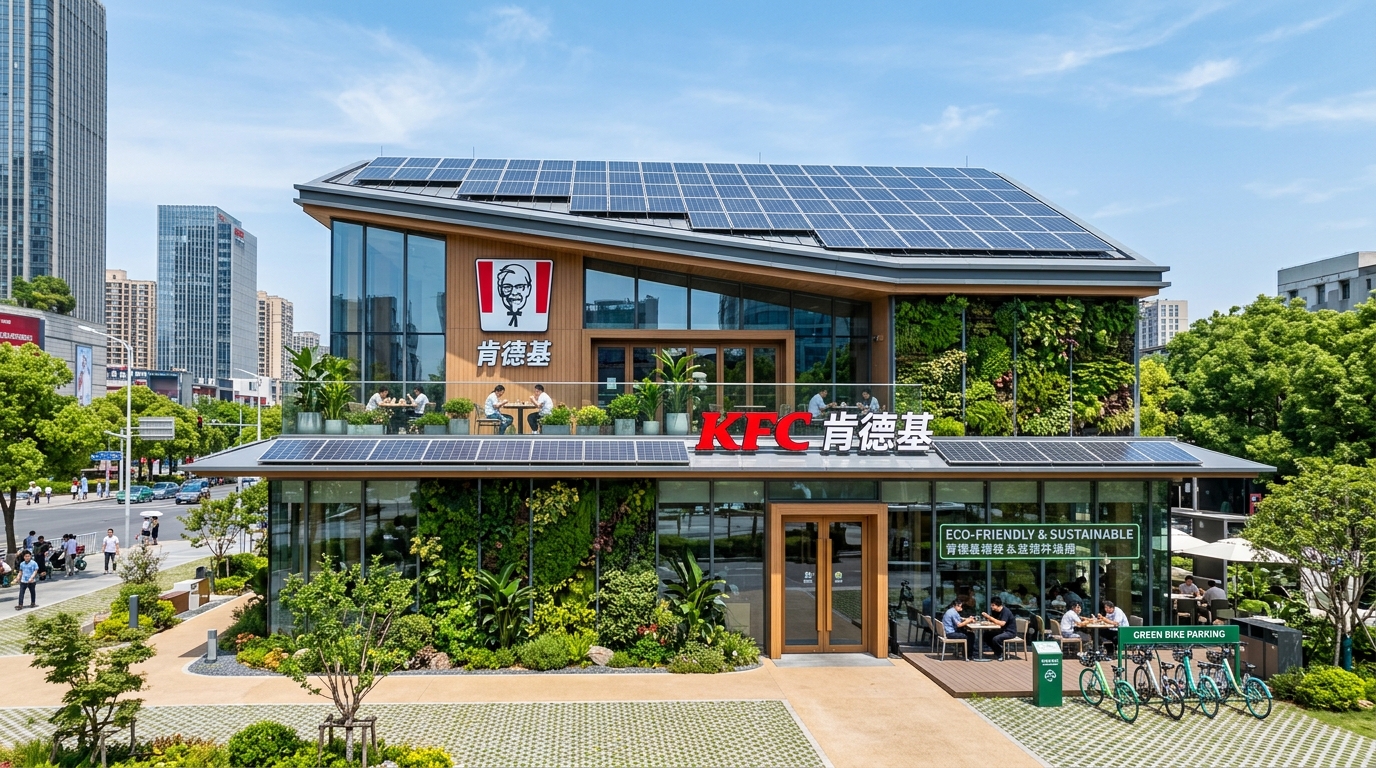
Yum China, the master franchisee of KFC in China, has opened its first “Zero-Carbon” flagship restaurant in Shanghai. The eco-friendly showcase is designed to pioneer the brand’s sustainable ESG strategies, serving as a blueprint for reducing emissions across its massive retail footprint by 30% by the end of 2026.
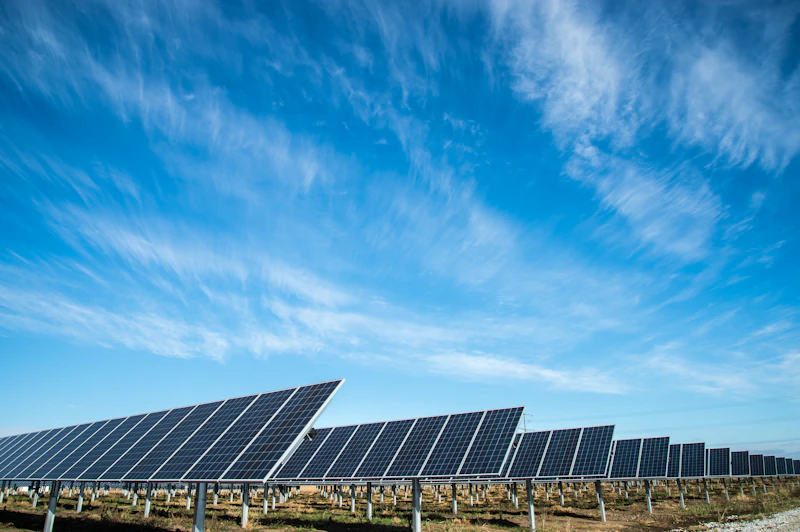
The Shanghai outlet features a rooftop solar panel system that generates 40% of the restaurant’s daily electricity. This is integrated with an AI-driven smart energy management system that optimizes power usage for fryers, cooling systems, and lighting based on store traffic. The interior architecture utilizes recycled materials, including upcycled PET bottles and plastic waste, while the packaging has transitioned entirely to 100% biodegradable materials.
A key operational innovation is the store’s AI-managed waste conversion system. Organic food waste and cooking oils are collected and processed via anaerobic digesters to produce biogas, which is cycled back to heat the restaurant’s water supply. This circular economy system has elevated the store’s waste recycling efficiency to 95%.
In the QSR sector, sustainability has evolved from a branding exercise into a regulatory and economic requirement. As the Chinese government tightens carbon emission guidelines, Yum China plans to scale these building technologies across its 10,000+ KFC and Pizza Hut locations, using modular upgrades to offset carbon tax liabilities and appeal to environmentally conscious consumers.