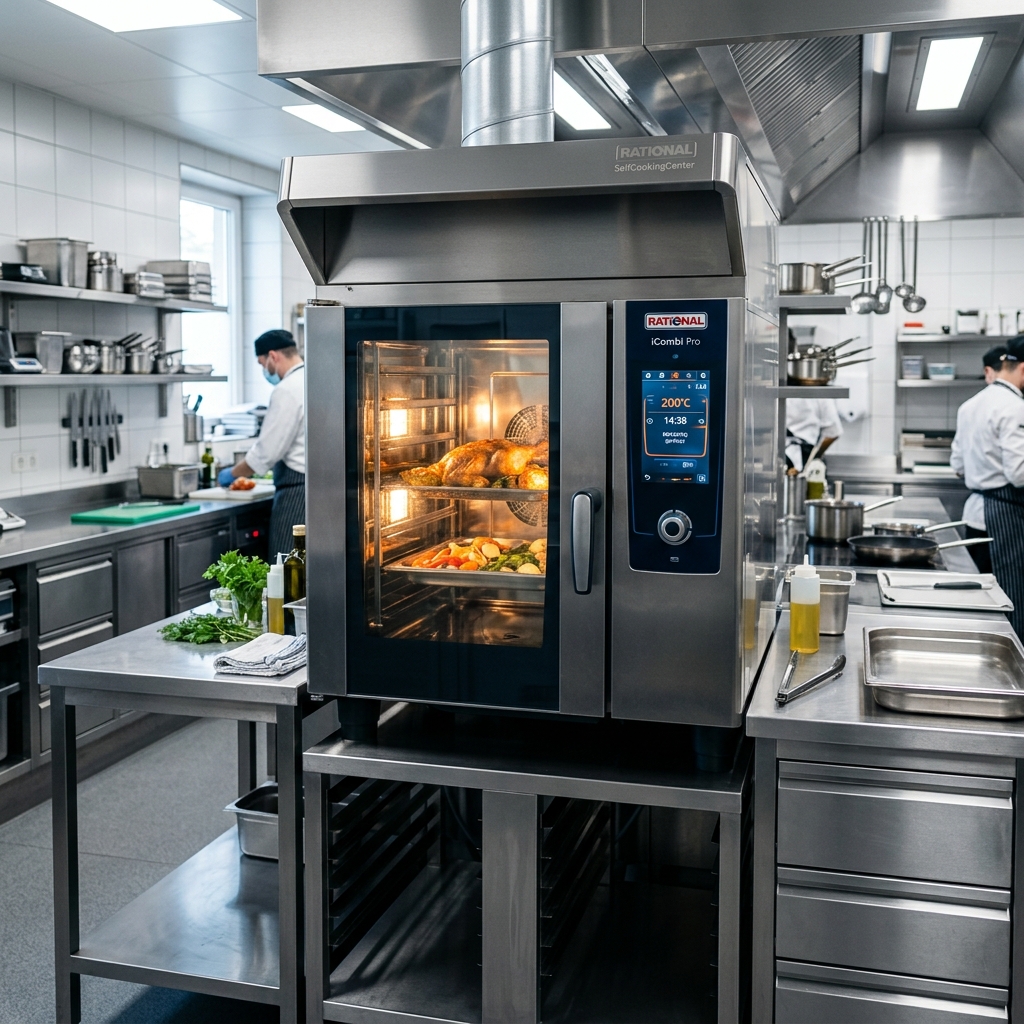
For years, the fast-food industry has been obsessed with the visual spectacle of robotic arms flipping burgers. But as we hit the mid-2026 hyper-automation cycle, the true ‘killer app’ of the restaurant tech stack is far more discrete, and infinitely more powerful: the Agentic AI Smart Oven. We have officially moved past basic Wi-Fi connectivity. The modern commercial kitchen is now anchored by autonomous cooking agents equipped with high-definition computer vision and predictive thermal sensors that execute flawless culinary precision without a single human touchpoint.

The mechanics are mind-blowing. When a crew member places a tray of raw proteins into the chamber, the oven’s internal optics instantly classify the item via image processing. The agentic AI then automatically initiates the precise cooking profile—dynamically adjusting humidity, fan speed, and temperature in real-time based on the exact browning level of the food. It completely removes human error from the equation, essentially hardcoding quality control into the hardware itself.
“This is a total paradigm shift for unit economics. We aren’t just saving minutes of labor; we are actively rescuing margin from the trash can,” explains a lead automation engineer at a major fast-casual chain. “By letting the oven’s neural net dictate the cook cycle, we are seeing food waste drop by up to 25%. The AI doesn’t get distracted during a lunch rush, and it doesn’t accidentally burn an 80-dollar batch of chicken breasts.”
The synergy happens when these smart ovens are fully integrated into the cloud-based Kitchen Display System (KDS). The KDS acts as the brain, pulling mobile orders and delivery data to preemptively warm the ovens and prioritize firing schedules based on real-time demand. This allows the human crew to step away from the dials and focus entirely on front-of-house hospitality.