California’s fast food industry is grappling with a seismic shift: the implementation of a new $20 per hour minimum wage. While academic circles and advocacy groups churn out conflicting studies attempting to dissect its impact – some predicting catastrophic job losses, others minimizing the fallout – operators on the ground are living a stark, undeniable reality. Forget the theoretical debates and the statistical squabbles. For business owners, especially the thousands of franchisees who form the backbone of California’s Quick Service Restaurant (QSR) sector, this isn’t an intellectual exercise; it’s an immediate, brutal hit to their bottom line, demanding rapid, often painful, operational adjustments to defend razor-thin margins.
As Liam O’Connor, a journalist focused on kitchen labor, operations, and the labor environment, my mandate is to cut through the noise. What we’re seeing isn’t a nuanced economic ripple; it’s a direct operational shockwave. Businesses are not waiting for consensus from conflicting data sets. They are making critical decisions right now that will redefine the fast food landscape, not just in California, but potentially nationwide.
The Ground-Level Tremors: Beyond the White Papers
The first, most immediate response from operators has been an inevitable price hike. A 25% surge in base labor costs cannot simply be absorbed by businesses already operating on single-digit profit margins. Consumers are seeing menu prices climb, a direct pass-through of increased operational expenses. But price adjustments are only part of the strategy. Many businesses are also taking a hatchet to staffing levels and operating hours. “Job cuts,” a term frequently disputed in some studies, are a very real conversation being had in back offices and kitchen conference calls across the state. Full-time positions are being reduced to part-time, new hiring freezes are in effect, and some shifts are being eliminated altogether.
Take the case of a mid-sized franchise owner I spoke with in Orange County. He’d just laid off three long-term night shift supervisors. “They’re great people, invaluable. But at $20 an hour, plus benefits, that’s an astronomical increase. I had to choose between keeping the lights on and keeping more staff than I could afford. The numbers don’t lie, no matter what a university report tries to tell you.” This isn’t just about direct wage costs; it’s about the compounding effect of payroll taxes, workers’ compensation, and benefits tied to a higher base wage, pushing the true cost of an employee far beyond the headline $20.
The Franchisee’s Bind: A Profitability Squeeze
The franchise model, often lauded for its entrepreneurial spirit, places franchisees in an especially precarious position. They are individual business owners, often with significant personal investment, but frequently bound by corporate mandates regarding menu, sourcing, and often, pricing. While corporate entities might absorb some of the pressure at the brand level, it’s the local franchisee who bears the full brunt of increased operational costs.
For many, particularly those with multiple locations, the new wage law threatens to obliterate their already lean profit margins, which typically hover between 2-6%. This isn’t just theoretical financial strain; it’s leading to very real business closures, stalled expansion plans, and a chilling effect on future investment in California. The erosion of profitability doesn’t just impact the franchisee; it sends ripples through local economies, affecting suppliers, landlords, and service providers who rely on these businesses.
Lean Operations: Survival, Not Just Strategy
This escalating labor cost environment is forcing an aggressive embrace of lean operational principles. What was once a strategic advantage is now an imperative for survival. Every inefficiency, every ounce of waste, is magnified under the glare of a higher cost structure. Businesses are relentlessly focused on optimizing every aspect of their operations:
- Staffing Optimization: Beyond simple cuts, this involves rigorous cross-training, multi-tasking, and scheduling precision to ensure no unnecessary labor hours.
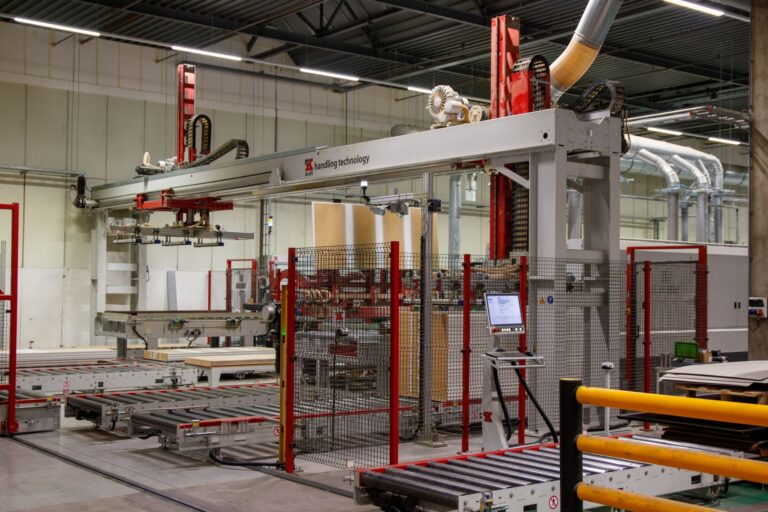
- Technological Investment: Automation is no longer a futuristic concept; it’s a current-day necessity. Self-ordering kiosks reduce the need for front-of-house staff. Robotic fryers and prep machines mitigate back-of-house labor demands. While these investments carry significant upfront costs, the long-term savings in labor become increasingly attractive at $20/hour.
- Menu Engineering: Streamlining menus to focus on high-margin, less labor-intensive items. Reducing complexity to speed up service and reduce prep time.
- Supply Chain Efficiency: Even greater scrutiny on inventory management, waste reduction, and supplier negotiations to claw back every possible cent.
For operators who hadn’t already adopted a ruthlessly efficient, data-driven approach, the learning curve has become a sheer cliff. Those who can’t adapt, won’t survive.
What the Conflicting Studies Miss: The Intangibles
The academic studies, with their econometric models and statistical regressions, often miss the qualitative, human, and long-term strategic impacts on the ground. They might debate net job changes, but they rarely account for:
- The loss of entry-level opportunities for young or unskilled workers, traditionally a critical gateway into the workforce.
- The increased pressure and workload on remaining staff, potentially leading to burnout and reduced service quality.
- The chilling effect on innovation and risk-taking when businesses are solely focused on survival.
- The shift in the very nature of fast-food employment, moving from accessible, low-skill roles to positions demanding higher efficiency and interaction with technology.
While economists argue over methodologies, the P&L statement, the employee morale, and the customer experience are telling a much more immediate and visceral story.
The Road Ahead: A Precedent for the Nation?
California, often a bellwether for national trends, is serving as a high-stakes proving ground. What unfolds here will inevitably inform legislative debates and operational strategies in other states contemplating similar wage hikes. The food service industry, particularly QSR, must recognize that this isn’t an isolated incident but part of a broader, evolving labor landscape.
Proactive strategies for cost mitigation, aggressive technological adoption, and unyielding margin protection are no longer optional. Relying solely on political lobbying or hoping for a reversal is a gamble few businesses can afford. The future of fast food will be leaner, more automated, and hyper-focused on efficiency. This demands a fundamental rethinking of traditional operational models.
The conflicting studies may obscure the academic ‘reality,’ but for those running a fast food business in California, the operational reality is crystal clear. It’s a fight for survival, demanding swift action, ruthless efficiency, and an unwavering commitment to defending every percentage point of margin. The true story isn’t in a data set; it’s being written daily on the shop floors of thousands of struggling, yet adapting, restaurants.