Global food manufacturers are confronting an unprecedented confluence of systemic shocks: energy price volatility, critical fertilizer shortages, and escalating freight costs. This triple threat, significantly exacerbated by heightened geopolitical tensions stemming from the Iran war and broader Middle Eastern instability, presents a formidable challenge to an already strained global food supply chain. The implications extend far beyond immediate operational hurdles, portending sustained inflationary pressures, narrowed profit margins, and a critical imperative for robust strategic recalibration across the industry. As a journalist specializing in geopolitical supply chains and technology integration, my analysis focuses on the macro-level implications and the data-driven hedging strategies essential for navigating this turbulent landscape.
The Energy Shock: Fueling Inflationary Pressures
The immediate and most visible impact of Middle Eastern geopolitical instability manifests in the global energy markets. With the Strait of Hormuz, a critical chokepoint for approximately 20% of the world’s oil supply, situated at the epicenter of potential conflict, the specter of supply disruptions sends futures markets into predictable volatility. For the food industry, this translates directly into amplified operational expenditures. Fuel is the lifeblood of logistics, from farm machinery and fertilizer production to the transportation of raw materials and finished goods. Every link in the supply chain, from field to fork, is exposed to rising crude oil and natural gas prices.
Natural gas, in particular, is a foundational input for nitrogen-based fertilizers, making its price surge a compounding factor for agricultural commodity costs. Manufacturers must contend with not only direct energy costs for plant operations but also the embedded energy costs within every ingredient purchased. Effective risk management now demands sophisticated energy hedging strategies, leveraging futures and options to lock in prices for critical inputs and transportation fuel. Companies that have invested in real-time data pipelines monitoring geopolitical shifts and correlating them with energy market indicators will possess a distinct advantage in anticipating price spikes and executing timely hedges, protecting both their procurement budget and their freight spend.
The Fertilizer Crunch: A Foundation Eroded
The interconnectedness of energy and agriculture becomes starkly evident in the global fertilizer market. Russia and Belarus are significant exporters of potash and nitrogen fertilizers, while China plays a crucial role in phosphate production. However, natural gas is the primary feedstock for ammonia production, a key component of nitrogen fertilizers. Geopolitical tensions that disrupt natural gas supplies or impose export restrictions — whether from the Middle East or Eastern Europe — send immediate ripples through global agricultural commodity markets.
A fertilizer crunch directly impacts crop yields and, consequently, the price of agricultural staples such as wheat, corn, and soy. Food manufacturers reliant on these commodities for their product formulations face a double whammy: higher energy costs for processing and transportation, compounded by elevated raw material costs due to scarcer and more expensive fertilizers. The strategic response requires more than just reactive procurement. It necessitates a proactive approach to supplier diversification, exploring alternative fertilizer sources or even investing in upstream agricultural partnerships. Furthermore, advanced data analytics can model the impact of fertilizer price movements on specific commodity futures, enabling more precise hedging strategies for agricultural inputs. Companies must assess the resilience of their entire ingredient matrix, identifying vulnerabilities to specific fertilizer types and building contingency plans.
The Freight Surge: Navigating Turbulent Waters
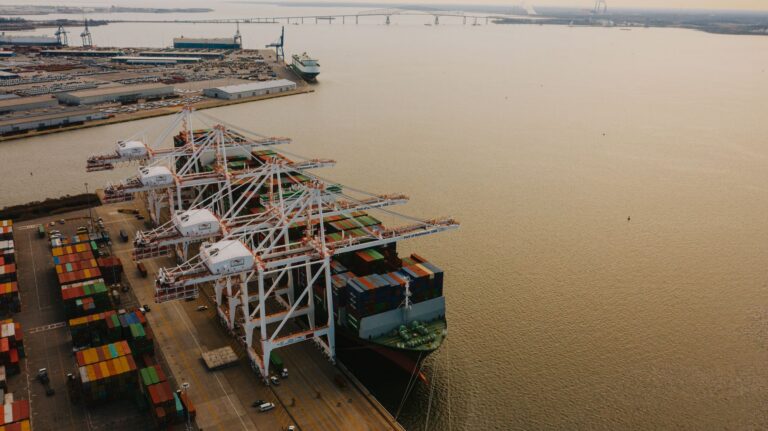
The Red Sea crisis, which has seen shipping costs soar due to rerouting around the Cape of Good Hope, offers a vivid precursor to the potential scale of a broader freight surge. An escalation of tensions in the Middle East, particularly involving the Strait of Hormuz, would inevitably lead to further disruptions in global shipping lanes, increased insurance premiums, and extended transit times. For food manufacturers, this translates into higher import costs for ingredients, higher export costs for finished products, and increased working capital tied up in longer supply chains.
The ripple effect is multi-faceted: container availability becomes constrained, port congestion intensifies, and the lead times for critical components and ingredients extend significantly. This environment demands a sophisticated approach to logistics. Leveraging real-time tracking via IoT devices, integrating AI-driven route optimization, and actively engaging in freight futures markets become non-negotiable. Manufacturers must re-evaluate their entire logistics network, considering nearshoring or friend-shoring strategies to mitigate long-distance shipping risks, while simultaneously building robust data pipelines to monitor geopolitical hot zones and predict potential impacts on maritime routes. The ability to dynamically re-route shipments and negotiate flexible contracts with multiple carriers will be paramount.
Strategic Imperatives: Architecting Resilience Through Data and Hedging
In this era of heightened geopolitical volatility, traditional supply chain management paradigms are insufficient. Food manufacturers must adopt a proactive, data-centric, and technologically integrated approach to build resilience. Here are key strategic imperatives:
- Advanced Data Pipelines & Predictive Analytics: Implement robust data ecosystems that integrate geopolitical intelligence, commodity market data, freight indices, and internal operational metrics. AI and machine learning models can then analyze these diverse datasets to identify emerging risks, forecast price movements, and predict supply disruptions with greater accuracy than ever before. This real-time visibility is the cornerstone of proactive decision-making.
- Comprehensive Hedging Strategies: Move beyond basic commodity hedging to encompass energy futures, freight derivatives, and currency hedging to mitigate financial exposure across multiple fronts. A sophisticated hedging portfolio, informed by predictive analytics, can significantly insulate margins from unexpected price spikes.
- Supply Chain Diversification & Geopolitical Risk Mapping: Map the geopolitical risk profiles of all critical suppliers and regions. This involves identifying single points of failure and actively diversifying sourcing to reduce dependency on volatile regions. Concepts like ‘nearshoring’ and ‘friend-shoring’ are gaining traction as manufacturers seek to build more resilient, albeit potentially more expensive, supply networks.
- Technology Integration for Transparency and Agility: Leverage technologies such as blockchain for enhanced supply chain transparency, IoT for real-time asset tracking and condition monitoring, and robotic process automation (RPA) for rapid adaptation to changing logistical scenarios. Digital twins of supply chains can simulate disruptions and test mitigation strategies before they occur in the physical world.
- Buffer Stock Optimization: While lean inventory has been a long-standing goal, the current environment necessitates a re-evaluation of buffer stock levels for critical raw materials and finished goods. Data-driven models can optimize safety stock levels to balance carrying costs with the cost of potential stockouts due to geopolitical events.
Conclusion: A New Paradigm for Supply Chain Agility
The triple threat of energy shock, fertilizer crunch, and freight surge, amplified by the Iran war and broader Middle Eastern instability, is not merely a transient challenge for the food manufacturing sector. It represents a fundamental shift towards a more complex and volatile operating environment. The era of predictable, cost-optimized global supply chains is yielding to a new paradigm demanding extreme agility, resilience, and data-driven foresight.
Food manufacturers that will thrive in this environment are those willing to invest aggressively in advanced technological infrastructure, develop sophisticated hedging capabilities, and meticulously map geopolitical risks onto their entire value chain. The ability to integrate real-time intelligence with operational and financial strategies will be the defining characteristic of leading enterprises, ensuring sustained profitability and market stability amidst an increasingly uncertain global landscape.