The unvarnished truth has landed, and it hits the fast-food industry with the force of a wrecking ball: California’s ambitious, or perhaps naïve, $20 fast food minimum wage mandate has directly led to 18,000 job losses. This isn’t theoretical economics; it’s a brutal reality laid bare by a new economic study. For any operator running a tight ship, battling razor-thin margins, and navigating the operational quagmire of today’s market, this figure is not just a statistic—it’s a stark warning shot across the bow of the entire food and beverage sector.
The report, spearheaded by the California Policy Center and analyzed by UC Riverside economist Christopher Thornberg, isn’t sugar-coating the facts. It’s a ground-level analysis of employment data from the moment the minimum wage jumped from $16 to $20 on April 1, 2024. The conclusion is unambiguous: the increase triggered a significant and rapid contraction in employment within the fast-food sector. This isn’t about debate; it’s about cause and effect, played out on the restaurant floors and balance sheets across the Golden State.
The Inevitable Operational Churn: Leaner by Force, Not Choice
When labor costs surge by a staggering 25% overnight, operators don’t simply absorb it. That’s a fantasy spun by those who’ve never looked at a P&L statement. What they do is react, aggressively and pragmatically. This isn’t a moral failing; it’s a fundamental requirement of survival. For years, I’ve preached the gospel of lean operations and ruthless margin defense. California’s new wage law has forced every fast-food franchise owner to implement these principles with unprecedented urgency.
The 18,000 lost jobs represent individuals, certainly, but for the business, they represent positions deemed unsustainable under the new cost structure. Operators have adopted a multi-pronged strategy:
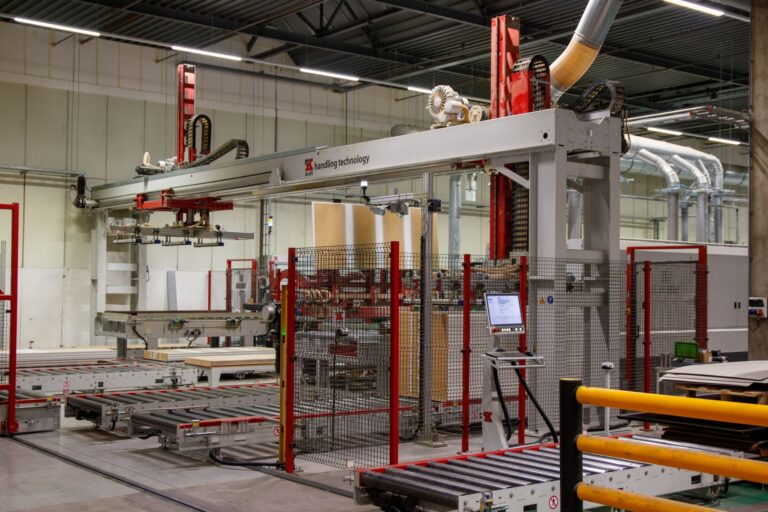
- Automation Acceleration: Kiosks are no longer an amenity; they are a necessity. Automated fryers, drink dispensers, and even robotic kitchen aids are becoming standard. The ROI on these investments now looks significantly more attractive when the human alternative comes with such a hefty price tag.
- Reduced Staffing Levels: Simply put, fewer people are doing more work. This means fewer cashiers, fewer line cooks, fewer drive-thru attendants. Shifts are being optimized to the minute, and non-essential roles are being eliminated.
- Cut Hours: For those who remain, hours are being trimmed. A full-time position may become part-time. Overtime is a non-starter. Every hour logged is scrutinized for its direct contribution to revenue.
- Menu Simplification & Price Hikes: To offset costs, some chains are streamlining menus to reduce labor-intensive prep. And, inevitably, prices are going up. But there’s a ceiling to what consumers will pay, especially in a competitive market. Operators are walking a tightrope: raise prices too much, and you lose customers; don’t raise them enough, and you lose your business.
This isn’t just about big chains; it’s about the countless franchisees who operate on even thinner ice. These are small business owners, often leveraging their life savings, now grappling with a sudden, massive increase in their single largest controllable expense. Their ability to innovate or even maintain current service levels is severely compromised.
The Financial Squeeze: Where Margins Go to Die
The fast-food sector is infamous for its slim profit margins, often hovering in the low single digits. A 25% hike in minimum wage is not a tweak; it’s an earthquake. Imagine a business with a 5% net profit margin. If labor costs, typically 30-35% of revenue, suddenly jump by a quarter, that 5% margin evaporates faster than ice cream on a California summer day. The financial imperative to cut costs, primarily labor, becomes not just a strategic option but an existential requirement.
The study specifically analyzed data from industries under NAICS code 722513 – “Limited-Service Restaurants.” This focused approach ensures the findings are directly relevant to the fast-food segment, not a broad generalization. The fact that the job losses are so concentrated and so immediate provides a compelling, if grim, case study for policymakers and operators alike.
This isn’t an isolated incident. We’ve seen similar patterns in other locations that have implemented aggressive wage hikes. The fundamental economic principle holds: when the cost of a factor of production (labor) significantly increases, businesses seek alternatives, either by reducing consumption of that factor or substituting it with more cost-effective alternatives (automation). The human cost of this economic reality is the 18,000 individuals now seeking new employment or facing reduced income.
A Warning Bell for the Nation: The California Experiment
California, often a bellwether for national policy, has inadvertently provided a harsh lesson for other states contemplating similar measures. The romantic notion that businesses can simply absorb higher wages without consequence is precisely that—a notion, divorced from the sweat and grind of real-world operations. This isn’t about blaming workers for wanting better pay; it’s about dissecting the unintended, yet entirely predictable, consequences of poorly calibrated policy.
For Foodsatlas.com readers, the takeaway is clear: regardless of where your operations are located, the pressures to optimize labor and embrace technological solutions are only intensifying. The future of fast-food operations isn’t about maintaining the status quo; it’s about aggressive adaptation. Expect to see continued investment in AI-driven scheduling, front- and back-of-house automation, and a re-evaluation of every single labor minute spent on the floor.
The conversation needs to shift from “should wages be higher?” to “how can businesses operate sustainably and profitably while offering competitive compensation?” The current approach in California has delivered a clear, albeit painful, answer to the first question’s unintended consequences: a significant reduction in the very jobs it aimed to uplift. Operators must be more agile, more data-driven, and more ruthless in their pursuit of efficiency than ever before. Those who fail to read these tea leaves will find themselves among the 18,000 casualties, albeit on the business side of the ledger.
The economic study serves as a critical barometer. It measures the health of an industry under duress and provides undeniable evidence of the direct link between mandated wage hikes and job displacement. For every restaurant owner, every regional manager, and every investor in the food service sector, this is not just news; it is a vital data point that demands immediate strategic recalibration. Ignore it at your peril.