California’s fast food sector is grappling with a harsh new reality. As the state’s minimum wage for fast food workers jumped to $20 an hour on April 1st, owner-operators across the Golden State have responded with immediate, drastic measures: slashing employee hours. This isn’t just an adjustment; it’s a desperate scramble to defend razor-thin margins and keep the lights on. For a segment of the food service industry already operating on the slimmest of profit margins, typically ranging from 2% to 6% on a good day, a roughly 25% increase in labor costs overnight is nothing short of an existential threat. This isn’t about greedy corporations; it’s about the brutal economics faced by small business franchisees, and the field report is grim.
The numbers don’t lie. A worker earning $16 an hour now demands $20. That’s an immediate $4 per hour increase per employee, before factoring in associated costs like payroll taxes, workers’ compensation, and benefits, which also surge proportionally. For a typical fast food restaurant employing dozens of staff, this translates to tens of thousands, if not hundreds of thousands, of dollars in additional annual expenditure. Where’s that money supposed to come from? In a business where every penny is already accounted for, there are only three levers: raise prices, cut costs, or close shop. Raising prices has its limits; customers have a breaking point, especially in a competitive market like fast food.
The Immediate Fallout: Hour Cuts and Operational Strain
No surprise, then, that the first and most immediate operational adjustment has been the widespread reduction of employee hours. Franchisees, from McDonald’s and Burger King to Pizza Hut and Round Table Pizza, are reporting significant cuts – some as much as 10% to 20% – to their total labor hours. This isn’t a theoretical exercise; it’s a boots-on-the-ground reality impacting thousands of workers who were supposedly meant to benefit from the wage hike. Many are now seeing their take-home pay shrink, ironically, due to fewer shifts.
This isn’t just a financial decision; it’s an operational nightmare. Less staff means longer wait times, reduced service quality, and increased pressure on the remaining crew. Drive-thrus slow down, order accuracy suffers, and the customer experience degrades. In a sector where speed and consistency are paramount, these cuts directly undermine the core value proposition. Operators are forced to make impossible choices: do you staff adequately during peak lunch, or ensure you have coverage for the late-night rush? Do you compromise on cleanliness or food prep efficiency?
Lean operations, a mantra often preached but rarely executed with such desperation, is now being tested in the crucible of real-world economics. Every task is being scrutinized. Can two people do the work of three? Can automation fill the gap? The focus isn’t just on doing more with less; it’s about surviving with barely enough.
The Shift Towards Automation and Efficiency
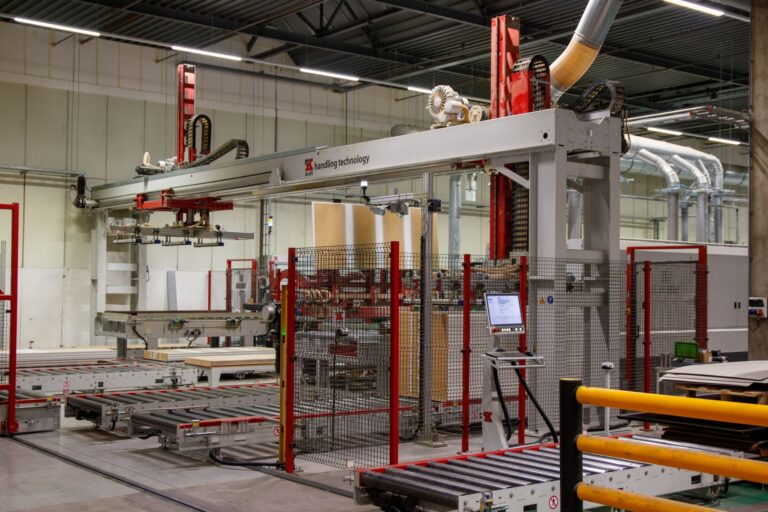
Beyond hour cuts, the wage hike is accelerating a long-anticipated shift towards automation. When human labor becomes significantly more expensive, the return on investment for technological solutions improves dramatically. Expect to see an aggressive uptake in self-ordering kiosks, AI-powered drive-thru systems, automated beverage dispensers, and even robotic kitchen assistants for tasks like frying and burger flipping. This isn’t futuristic conjecture; it’s becoming an economic imperative. Franchises that once saw these investments as long-term strategic plays now view them as immediate necessities for survival.
This pivot, while offering long-term efficiency, comes with significant upfront capital expenditure – another burden on already struggling franchisees. Those without the financial runway to invest in automation will be at a severe competitive disadvantage, potentially leading to further consolidation or outright exits from the market. The labor market itself will shift, prioritizing skilled technicians who can manage and maintain these new systems over entry-level counter staff.
The Paradox of Wage Legislation
The legislative intent behind the $20 minimum wage was clear: to provide a living wage for fast food workers. The reality, however, is a classic case of unintended consequences. Many workers are finding their total income reduced, not increased, as their hours are cut. This creates a deeply unstable labor environment. Employees who once relied on full-time hours are now piecing together part-time shifts across multiple establishments, if they can even find them.
From an operator’s perspective, this instability is a nightmare. High turnover, low morale, and a constant scramble to train new staff further erode efficiency and service quality. The cost of ‘cheap’ labor might have gone up, but the cost of ‘effective’ labor – including training, retention, and productivity – has become exponentially harder to manage. This isn’t just about managing payroll; it’s about managing a workforce under duress.
The Broader Industry Implications: A Canary in the Coal Mine?
What happens in California rarely stays in California. This dramatic wage increase and its fallout are sending shockwaves across the entire food and beverage industry, particularly in limited-service restaurants. Other states and municipalities considering similar wage mandates are now watching California with bated breath. The implications extend far beyond just wages; they force a fundamental re-evaluation of business models.
Operators nationwide need to treat this as a cautionary tale and a blueprint for proactive change. It’s no longer enough to react; businesses must anticipate. This means:
- Aggressive Data Analytics: Understand every labor minute, every sales peak, every operational bottleneck. Optimize scheduling to the micro-level.
- Technological Investment: Start planning for and investing in automation and efficiency tools now, not later.
- Menu Engineering: Re-evaluate menu items for profitability, ease of preparation, and labor intensity. Can high-labor items be streamlined or replaced?
- Supply Chain Optimization: Push harder on suppliers for cost savings. Every cent counts.
- Customer Value Proposition: How much price elasticity do you truly have? Can you justify higher prices with perceived value, or will customers simply go elsewhere?
This isn’t just about surviving a wage hike; it’s about fundamentally re-engineering operations for a future where labor costs are consistently rising and margins are perpetually under siege. The old ways of operating are dead. For any food service business, especially those reliant on high-volume, low-margin models, the message from California is stark: adapt or be left behind. The fight for profitability is now a tooth-and-nail battle, demanding ruthless efficiency and a cold, hard look at every single operational expenditure. Operators who embrace radical lean principles will be the ones left standing when the dust settles.