Presidential Executive Order 14017, issued in February 2021, marks a pivotal moment for global commerce, signaling a strategic re-orientation of American economic policy toward robust domestic supply chain resilience. For the food and beverage (F&B) industry, this directive, particularly as overseen by the FDA, is not merely a regulatory update; it is an imperative for a profound re-evaluation of operational models, geopolitical dependencies, and technological integration. Businesses operating within this sector must now navigate a landscape where supply chain efficiency is increasingly secondary to strategic autonomy and resilience, driven by a national security mandate.
The core objective of EO 14017 is to identify, assess, and mitigate vulnerabilities across critical supply chains, including pharmaceuticals, critical minerals, semiconductors, and crucially, the food supply chain. The FDA’s role, traditionally centered on food safety and public health, has now expanded to encompass a broader national economic security function, tasked with ensuring the uninterrupted flow of essential food items. This includes not just finished products, but the intricate web of raw ingredients, processing equipment, packaging materials, and the logistics infrastructure that supports them. The implications for F&B are thus systemic, compelling a shift from purely ‘just-in-time’ lean principles to a more nuanced ‘just-in-case’ approach, strategically layered with advanced data analytics and global risk hedging.
Geopolitical Realignment and Sourcing Diversification
The mandate of EO 14017 is inherently geopolitical. It seeks to reduce reliance on foreign adversaries and foster greater domestic or ‘friend-shored’ production capacities. For the F&B sector, this translates into a heightened scrutiny of sourcing geographies. Companies must now conduct granular analyses of their entire bill of materials, identifying origin points for everything from specialty ingredients and flavor compounds to processing chemicals and even critical spare parts for manufacturing machinery. The geopolitical implications are stark: regions once favored for their cost efficiencies may now present unacceptable political or logistical risks. This necessitates a strategic pivot towards:
- Regionalization: Building more robust supply chains within North America or allied nations, fostering shorter lead times and reducing exposure to distant political instabilities or transit chokepoints.
- Dual-Sourcing & Redundancy: Actively developing parallel supply lines from diverse geographical locations, ensuring that disruption in one region does not lead to complete operational paralysis. This will inevitably increase procurement complexity and potentially unit costs but is now framed as a critical investment in business continuity.
- Regulatory & Trade Policy Shifts: Anticipating potential tariffs, non-tariff barriers, or revised trade agreements designed to incentivize domestic production or sourcing from preferred allies. Forward-looking companies are already modeling scenarios based on these potential shifts.
Logistics Risk Mitigation and Infrastructure Investment
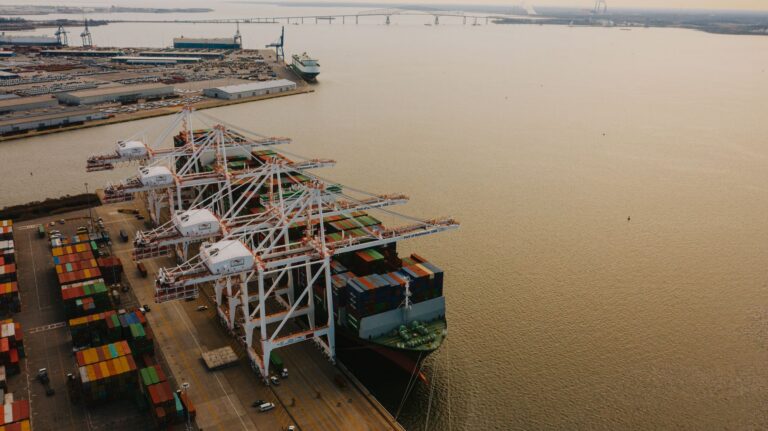
The Executive Order underscores the fragility exposed by recent global disruptions—port congestion, labor shortages, and energy price volatility. For the F&B industry, where perishable goods demand precise temperature control and swift movement, logistics resilience is paramount. This extends beyond basic transportation to the very fabric of the supply chain infrastructure. Analysis, from David Chen’s perspective, reveals several critical areas:
- Multimodal Optimization: Reducing over-reliance on single modes of transport (e.g., ocean freight) by strategically integrating rail, truck, and even air cargo where speed and reliability justify cost. This demands sophisticated network optimization models.
- Cold Chain Integrity: Investing in advanced cold chain technologies and robust monitoring systems (IoT sensors, predictive analytics) to ensure product quality and safety across extended, diversified supply routes. The cost of failure here is not just financial, but reputational and public health-related.
- Warehouse & Distribution Network Augmentation: Strategic expansion or re-positioning of distribution centers, including potential for increased strategic stockpiling of critical, non-perishable ingredients, a departure from traditional lean inventory models.
- Port & Inland Infrastructure Engagement: Active lobbying and collaboration with government agencies and logistics providers to advocate for infrastructure improvements that can alleviate bottlenecks and enhance throughput capacity, especially for temperature-sensitive cargo.
Technology Integration: The Central Nervous System of Resilience
A core tenet of building resilient supply chains, as envisioned by EO 14017, is the pervasive integration of advanced technologies. For the F&B sector, this isn’t about incremental efficiency gains; it’s about foundational transformation enabling end-to-end visibility, predictability, and autonomous decision-making.
Data Pipelines and Analytics: The ability to collect, process, and analyze real-time data from every node of the supply chain is no longer a competitive advantage but a survival mechanism. Implementing robust data pipelines—from farm to fork—allows companies to:
- Predictive Risk Assessment: Utilize AI and machine learning to forecast potential disruptions (weather events, geopolitical shifts, labor actions) and model their impact, enabling proactive mitigation strategies.
- Demand Sensing & Forecasting: Improve accuracy in demand forecasting, reducing waste and optimizing inventory levels across a more diversified supplier base.
- Traceability and Transparency: Leverage blockchain technology to create immutable records of product origins, certifications, and transit details, crucial for both regulatory compliance and consumer trust, especially in a de-risked sourcing environment.
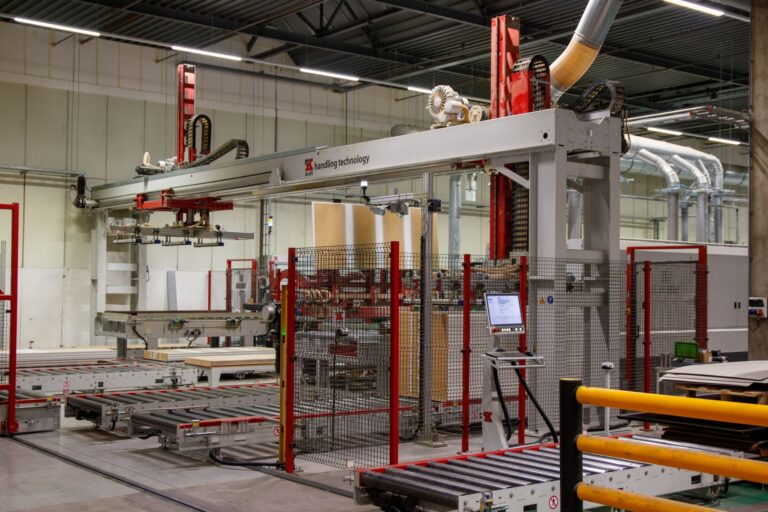
Automation and IoT: Investment in robotic process automation in manufacturing and warehousing, coupled with IoT sensors monitoring environmental conditions, equipment health, and inventory levels, will be critical. This reduces human error, enhances operational efficiency in an increasingly complex network, and provides continuous, granular data feeds for analytical engines.
Global Hedging Strategies and Financial Implications
The pursuit of supply chain resilience under EO 14017 will undoubtedly impact the financial architecture of the F&B industry. Companies must develop sophisticated global hedging strategies that extend beyond traditional commodity price risk to encompass geopolitical and logistical exposures.
- Commodity Hedging Refinements: Diversifying futures and options contracts across multiple exchanges and geographies to mitigate price volatility arising from regional supply disruptions or trade policy changes.
- Insurance and Risk Transfer: Exploring specialized insurance products that cover geopolitical risk, supply chain interruption, and non-delivery from specific regions.
- Strategic Inventory Valuation: Re-evaluating the cost of carrying strategic reserves of critical inputs. While increasing working capital, this is now a mandatory cost of resilience, requiring a different financial calculus than simple inventory turns.
- Investment in Domestic Capacity: Capital expenditures will shift towards building or expanding domestic manufacturing, processing, and storage facilities, potentially through government incentives or public-private partnerships. This re-shoring requires significant financial outlays and a long-term investment horizon.
The Imperative for C-Suite Leadership
Executive Order 14017 is more than a bureaucratic directive; it’s a clarion call for F&B leadership to fundamentally re-architect their global operating models. The mandate for resilience, driven by national security considerations, transcends traditional cost-benefit analyses. The ‘cost of doing business’ now implicitly includes the ‘cost of not being resilient,’ which can manifest as significant market share loss, reputational damage, and even existential threats during periods of prolonged disruption.
The coming years will demand aggressive investment in technology, deep collaboration with government agencies and logistics partners, and a proactive engagement with the evolving geopolitical landscape. For companies that fail to integrate macro-level geopolitical insights with micro-level operational data, the path ahead will be fraught with unmanageable risks. Those that strategically pivot, leveraging advanced analytics and comprehensive hedging strategies, will not only comply with the Executive Order but will emerge as the resilient leaders in a new era of global food security.