Archer-Daniels-Midland (NYSE: ADM), a cornerstone of global agribusiness, commands significant attention within the S&P 500, not merely as a large-cap constituent but as a critical bellwether for the interconnected global food supply chain. Its recent prominence underscores a broader market recognition of the profound operational complexities and strategic imperatives inherent in feeding the world. For business leaders and investors in the food & beverage sector, understanding ADM’s strategic depth provides invaluable insights into navigating geopolitical volatility, managing logistics risks, and leveraging technological integration across the agricultural commodity landscape.
The Macro Lens: Geopolitical Resilience and Market Volatility
ADM’s operations are a direct, often immediate, reflection of global geopolitical stability. As one of the ‘ABCD’ quartet of dominant global agricultural traders (alongside Bunge, Cargill, and Louis Dreyfus), its vast network for sourcing, processing, and distributing crops — from grains and oilseeds to specialty ingredients — positions it at the nexus of international trade and food security. The S&P 500’s focus on ADM is, therefore, an implicit acknowledgement of this critical role, particularly amidst ongoing geopolitical fragmentation and trade reconfigurations.
Consider the recent disruptions emanating from the Black Sea region, a critical breadbasket for global grain exports. ADM’s diversified global footprint, encompassing strategic assets from South America to North America, Europe, and Asia, allows it to pivot sourcing strategies and reroute supply lines with remarkable agility. This is not happenstance but the result of decades of strategic infrastructure investment and the development of sophisticated data pipelines. These pipelines feed real-time intelligence on crop yields, weather patterns, port congestion, and political developments into ADM’s global trading desks, informing complex hedging strategies designed to mitigate price volatility in a sector notoriously susceptible to external shocks.
For the downstream food and beverage industry, ADM’s capacity to absorb and manage such macro-level shocks translates directly into greater supply stability and predictable ingredient costs. Its financial health and operational resilience are, in essence, a strategic hedge for thousands of manufacturers, processors, and retailers who rely on a consistent flow of raw materials. The S&P 500’s keen interest in ADM signals an understanding that its ability to navigate global turbulence is paramount to broader economic stability, especially concerning food inflation and supply chain integrity.
Navigating the Logistics Labyrinth: Infrastructure as a Strategic Asset
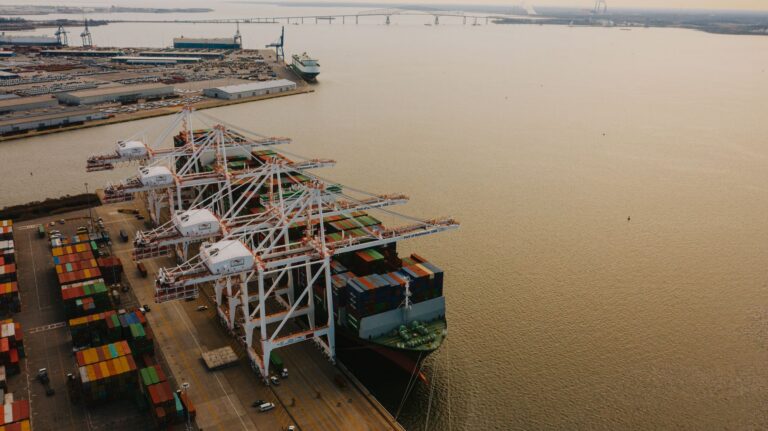
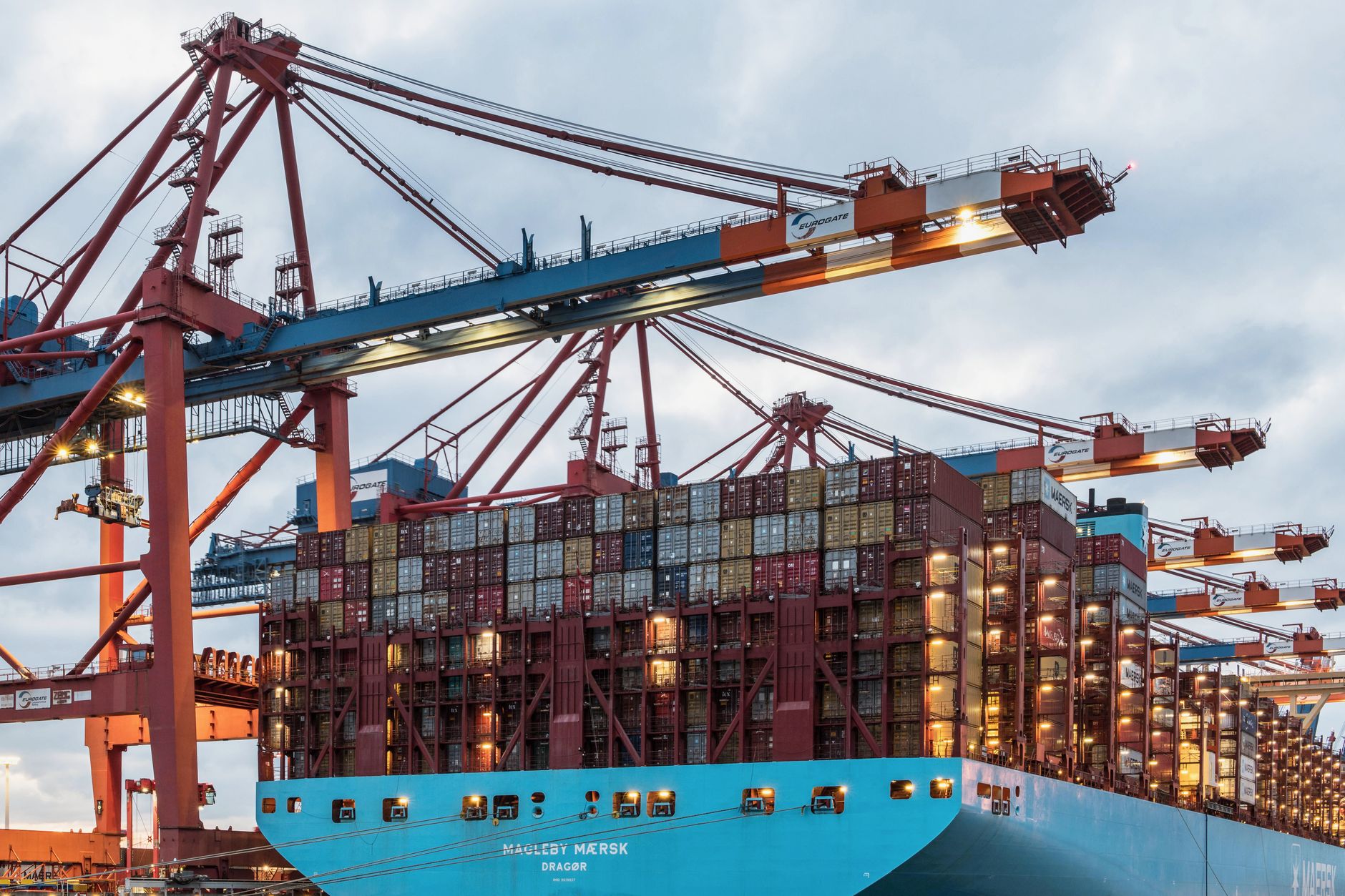
Beyond geopolitical maneuvering, ADM’s strategic strength lies in its command of an unparalleled logistical infrastructure. This encompasses a vast network of barges, railcars, trucks, port terminals, and ocean vessels. For an entity operating at this scale, logistics is not merely an operational cost center but a core competitive advantage and a significant risk mitigation tool. Investment in this physical network, coupled with continuous optimization, allows ADM to maintain flow even when regional bottlenecks emerge.
Take, for instance, the perennial challenges of low water levels on the Mississippi River or congestion at key global ports. ADM’s ability to shift between different modes of transport, leverage its extensive storage capacity, and utilize predictive analytics to anticipate and avoid chokepoints is crucial. This integrated logistics strategy allows it to minimize transit times, reduce spoilage, and maintain delivery schedules – critical factors for sensitive food ingredients. The deployment of IoT sensors on its assets provides granular data, creating a ‘digital twin’ of its physical supply chain that enables proactive decision-making rather than reactive problem-solving.
Such logistical prowess is central to global hedging strategies. Efficient transport directly impacts landed costs, and the ability to move commodities swiftly and reliably opens opportunities for arbitrage and risk transfer across different markets. For B2B partners, ADM’s logistical robustness translates to higher service levels and greater reliability, underpinning their own production schedules and inventory management.
The Digital Edge: Technology’s Role in Supply Chain Optimization
ADM’s sustained relevance, and its S&P 500 status, cannot be fully appreciated without acknowledging its strategic embrace of technology. The company has made significant strides in integrating advanced data analytics, artificial intelligence, and machine learning into its core operations, transforming traditional commodity trading into a data-driven science. These technological integrations are not peripheral; they are fundamental to how ADM manages risk, optimizes its sprawling network, and informs its global hedging strategies.
Data pipelines are the lifeblood of this digital transformation. ADM leverages vast datasets, from satellite imagery for crop yield forecasting and weather prediction to real-time market feeds and logistical tracking data. AI/ML algorithms analyze these inputs to forecast demand, optimize storage and transport routes, and identify potential supply chain disruptions long before they materialize. This predictive capability significantly reduces operational uncertainty and allows for more precise inventory management, minimizing waste and maximizing efficiency.
Furthermore, ADM is actively exploring and deploying blockchain technology for enhanced traceability and transparency across its supply chains, particularly for high-value or sustainably sourced ingredients. This fosters trust and ensures compliance for B2B customers demanding greater visibility into their sourcing origins. Precision agriculture initiatives, often involving partnerships or direct investments, also feed into ADM’s digital strategy, enabling more efficient and sustainable raw material sourcing from the farm gate.
The synergy between robust data analytics and global hedging is profound. By providing clearer, more accurate insights into future supply and demand, technological integration allows ADM to execute more sophisticated and effective financial hedges, protecting its margins and ensuring stability for its downstream partners against the vagaries of commodity markets.
Financial Implications for the Food & Beverage Sector
ADM’s position within the S&P 500 sends a clear signal to the food and beverage industry: the foundational players in agricultural commodities are not just suppliers, but strategic partners whose financial health and operational foresight are intrinsically linked to the sector’s broader success. ADM’s performance metrics – revenue growth, profit margins, and return on capital – are indicative of the broader health and future trajectory of global food systems.
Its strategic capital allocation decisions, such as investments in alternative proteins, sustainable sourcing platforms, and innovative processing technologies, provide a roadmap for future trends and potential disruptions in the F&B space. Companies looking to innovate in plant-based products or meet evolving consumer demands for ethical sourcing will find ADM’s strategic moves highly relevant. The consistency and reliability ADM offers through its resilient supply chains and sophisticated risk management capabilities allow downstream companies to focus on product development, marketing, and distribution, rather than expending excessive resources on supply security.
In conclusion, Archer-Daniels-Midland’s deserved attention within the S&P 500 transcends mere market capitalization. It is a powerful affirmation of its critical, multifaceted role in navigating geopolitical currents, fortifying complex logistics networks, and leveraging cutting-edge technology to maintain the stability and resilience of the global food supply chain. For the food & beverage industry, ADM is not just an ingredient provider; it is a strategic sentinel, whose operational prowess and data-driven foresight offer crucial insights into the evolving landscape of global agribusiness and the future of food.