California’s fast-food sector is facing a harsh reality check. The recent surge in the minimum wage to $20 an hour wasn’t just a political talking point; it was a detonation charge under the industry’s already thin margins. The fallout? Thousands of jobs vanished, prices for consumers soared, and operators across the state are scrambling to re-engineer their entire business models. This isn’t about social policy anymore; it’s about raw, unavoidable economic consequences for every single restaurant struggling to stay afloat.
The National Review’s report isn’t a surprise to anyone who understands the brutal math of running a food business. When labor costs, typically the largest controllable expense, jump by upwards of 25% overnight, the system breaks. Businesses aren’t charities; they operate on razor-thin profits. The immediate, predictable response from operators under this kind of pressure is not to absorb the cost – that’s a suicide mission – but to adapt, often ruthlessly. That adaptation manifests in precisely what we’re seeing: fewer employees, reduced hours for existing staff, and menu prices that make a family meal feel like a luxury tax.
The Unavoidable Equation: Costs, Jobs, and Consumer Pain
Let’s strip away the rhetoric. For years, the lean operation model has been the bedrock of fast-food success. Every square foot of kitchen space, every minute of labor, every ingredient portioned – it’s all meticulously optimized for efficiency and margin protection. A $20 minimum wage throws a wrench into that finely tuned machine, forcing a complete recalibration. Operators are not just cutting corners; they are fundamentally rethinking their staffing matrix. This means delaying new hires, letting go of less productive staff, and in many cases, outright freezing expansion plans that would have created new opportunities. The “thousands of jobs” lost aren’t abstract numbers; they represent livelihoods decimated by a policy that failed to grasp the economic fundamentals of the industry it sought to regulate.
The consumer, supposedly the beneficiary of these wage hikes, is now shoulder the burden. We’re seeing price increases ranging from 5% to 20% on everyday items. That value meal that once offered an affordable option is now noticeably pricier, stretching household budgets already strained by inflation. This isn’t just about McDonald’s or Taco Bell; it ripples through the entire F&B ecosystem. When fast food becomes less affordable, it impacts everything from grocery choices to family dining habits. The irony is stark: a policy aimed at helping the working class ends up hitting them in the wallet, both as consumers and, often, as displaced workers.
The Accelerated March Towards Automation
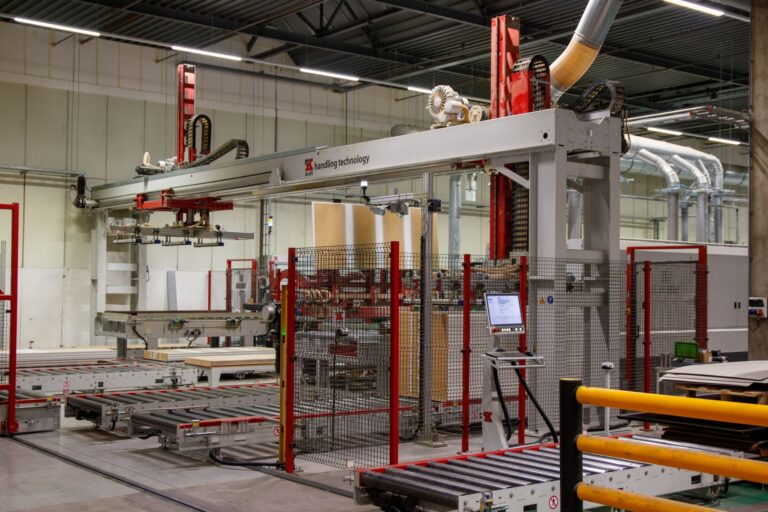
If you wanted to accelerate the shift towards automation, a dramatic wage hike is your fastest route. Why pay a human $20 an hour when a kiosk can take orders tirelessly, accurately, and without a lunch break? Why staff a full line when robotic fryers and automated beverage dispensers can handle volume with consistent quality? This isn’t a futuristic fantasy; it’s a current reality being aggressively deployed in California. Operators are pouring capital into technology – self-ordering kiosks, robotic arms for food prep, AI-driven inventory management – not because they’re enamored with robots, but because it’s a cold, hard economic necessity for margin defense. This trend will only intensify, forever altering the labor landscape in the quick-service industry.
The operational implications are immense. Beyond the initial shock, businesses are engaged in a long-term strategic pivot. Menu simplification is one tactic: fewer complex items means less prep time, fewer ingredients, and ultimately, less labor required. Supply chain renegotiations are another: squeezing every last cent out of procurement to offset escalating labor costs. It’s a relentless pursuit of efficiency, forcing operators to scrutinize every single process and expenditure. Those who cannot adapt, who cannot innovate their way out of this cost crunch, will simply cease to exist. That’s the brutal truth of the market.
A Blueprint for Other States? A Warning Shot.
California often serves as a bellwether for policy changes across the United States. Other states contemplating similar drastic minimum wage increases would be wise to study the unvarnished consequences unfolding there. This isn’t about vilifying employees; it’s about recognizing the intricate balance required to run a sustainable business. A healthy labor environment requires a healthy business ecosystem. When one side of the equation is aggressively altered without considering the systemic impact, the result is predictable: market disruption, job displacement, and higher costs for everyone.
For Foodsatlas.com readers, the message is clear: margin protection is paramount. Your operational agility, your willingness to embrace technology, and your ability to meticulously control every aspect of your P&L are no longer competitive advantages – they are prerequisites for survival. The California experiment demonstrates that economic realities always trump political aspirations. Operators everywhere must learn from this, not just to brace for potential similar mandates, but to proactively build more resilient, lean operations capable of weathering unprecedented cost pressures. The market doesn’t care about good intentions; it only responds to sound economics. And right now, California’s fast food operators are learning that lesson the hard way.