The recent decision by the Trump administration to remove tariffs on certain food and agricultural products has sent a ripple through global supply chains, signaling a critical juncture for the food and beverage (F&B) industry. This policy pivot, while seemingly a boon for cost reduction and market access in specific categories, introduces a new layer of geopolitical volatility that demands immediate, granular analysis from F&B executives. Far from offering straightforward relief, this action necessitates a fundamental recalibration of risk models, operational strategies, and global hedging mechanisms, as companies navigate a trade landscape increasingly characterized by rapid, high-impact policy shifts.
For an industry perennially exposed to the vagaries of climate, geopolitics, and consumer demand, tariff adjustments represent more than just changes in import duties. They are harbingers of deeper shifts in international trade relations, impacting everything from sourcing geographies and logistics networks to commodity pricing and long-term investment strategies. The immediate effect for the F&B sector will likely manifest as a reduction in import costs for the specified products, potentially easing inflationary pressures on raw materials and, in turn, offering a competitive advantage to those agile enough to swiftly adjust their procurement strategies. However, the transient nature of such policy decisions under a fluctuating political climate mandates caution and robust contingency planning.
Geopolitical Realignments and Market Dynamics
The removal of these tariffs, particularly if targeted at specific trading partners, suggests a potential thawing or realignment of diplomatic and economic relations. This can fundamentally alter the competitive landscape. For instance, if tariffs were lifted on agricultural products from a particular region, it could empower producers in that region to regain market share, potentially displacing existing suppliers that had filled the void during the tariff imposition. This creates a cascade effect: contract negotiations with current suppliers may need revision, long-term sourcing agreements could face disruption, and diversification strategies that were painstakingly built to circumvent previous trade barriers might suddenly appear redundant or suboptimal.
Moreover, the F&B industry must consider the broader macroeconomic impact. A reduction in tariffs could lead to increased import volumes, potentially lowering domestic prices for those commodities. While beneficial for consumers, this could strain domestic producers who had enjoyed protection under the tariff regime. Companies with vertically integrated supply chains or significant domestic procurement operations must analyze these localized competitive pressures. Furthermore, the global commodity markets, already sensitive to supply-demand imbalances, will react to these policy changes, driving price fluctuations for essential ingredients like grains, oils, and proteins. Organizations must possess sophisticated market intelligence to anticipate these shifts and adjust their procurement portfolios accordingly, perhaps by leaning into futures contracts or other derivatives as hedging instruments.
Logistics Network Resilience and Risk Mitigation
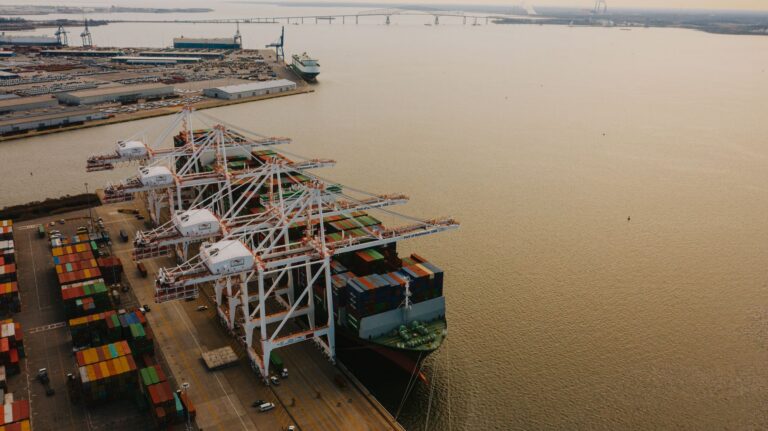
The implications for logistics and supply chain resilience are profound. Tariff removal can trigger a rapid shift in trade lanes and port activity. Companies that had painstakingly re-routed supply lines or invested in new logistics infrastructure to bypass high-tariff regions might now find those investments misaligned with the new policy direction. Conversely, those that maintained dormant relationships or were positioned to pivot quickly could gain a significant lead.
Key considerations include port congestion, shipping capacity allocation, and multimodal transportation efficiency. An influx of previously tariff-burdened goods can overwhelm existing infrastructure, leading to delays and increased freight costs even as import duties decline. F&B supply chain leaders must analyze their logistics providers’ capabilities to scale up or down, renegotiate contracts to reflect new trade patterns, and perhaps explore new warehousing and distribution hubs. The emphasis must shift from cost minimization under a stable tariff regime to operational agility and risk mitigation in an environment where policy changes can emerge with little forewarning. This demands real-time visibility into the entire logistics pipeline, from origin farm to final distribution center, identifying potential bottlenecks before they materialize into critical disruptions.
The Imperative of Data Pipeline Integrity and Predictive Analytics
In this era of geopolitical flux, the F&B industry’s ability to navigate tariff changes and other trade policy shifts hinges critically on its data infrastructure. Robust data pipelines are no longer a competitive advantage; they are a fundamental requirement for survival. Companies must integrate data from diverse sources—geopolitical intelligence platforms, commodity exchanges, logistics trackers, weather forecasts, and internal sales data—into a unified, real-time analytical framework.
Predictive analytics and artificial intelligence (AI) tools become indispensable. AI algorithms can process vast amounts of unstructured data, including political speeches, news sentiment, and trade reports, to identify emerging patterns and predict potential policy shifts with greater accuracy than human analysis alone. This foresight allows F&B organizations to proactively model various scenarios, such as the reinstatement of tariffs or the imposition of new trade barriers, and pre-plan their responses, whether through alternative sourcing, inventory adjustments, or financial hedging. Blockchain technology also gains renewed importance in this context, offering immutable records for supply chain provenance and regulatory compliance, ensuring transparency and trust in a landscape of shifting trade rules.
Global Hedging Strategies: Beyond Financial Instruments
David Chen’s analysis emphasizes that effective hedging in the F&B sector extends far beyond traditional financial instruments. While commodity futures and currency options remain vital for mitigating price and exchange rate volatility, the current environment demands a more holistic, multi-layered approach to risk management:
- Operational Hedging: This involves diversifying sourcing across multiple geographies and suppliers, even if it entails slightly higher immediate costs. The goal is to build redundancy so that no single tariff imposition or political decision can cripple the entire supply chain. Agile manufacturing capabilities that allow for quick shifts in product formulation or ingredient usage also fall under this category.
- Strategic Hedging: This encompasses long-term investments in market access and infrastructure across various trade blocs. It might mean cultivating relationships with suppliers in emerging markets, establishing regional processing facilities, or even engaging in direct foreign investment to create localized supply chains that are less susceptible to cross-border trade disputes.
- Information Hedging: This refers to the investment in advanced data analytics, AI, and expert geopolitical intelligence teams. The ability to anticipate policy shifts and their potential impacts is perhaps the most powerful hedge against uncertainty. By understanding the stochastic variables driving political decisions, companies can position themselves to react proactively rather than reactively.
The removal of tariffs, while providing immediate relief, must be viewed through the lens of potential future reversals. The F&B industry operates on long lead times and significant capital investments. A ‘stop-go’ tariff policy creates an unpredictable operational environment, where the absence of tariffs today does not guarantee their absence tomorrow. This makes the development of resilient, adaptable, and data-driven supply chains paramount.
The Path Forward: Agility, Data, and Strategic Foresight
F&B leaders must recognize that the recent tariff adjustments are not an isolated event but rather an amplification of an ongoing trend towards geopolitical complexity and trade policy fluidity. Success in this environment will not be defined by merely capitalizing on short-term cost reductions, but by building enduring strategic capabilities:
- Enhanced Scenario Planning: Develop sophisticated models to assess the impact of various tariff scenarios (e.g., re-imposition, expansion to new categories/countries) on profitability, market share, and operational continuity.
- Investment in Data Infrastructure: Prioritize investments in real-time data integration, analytics platforms, and AI/ML capabilities to generate actionable insights from the deluge of global trade data.
- Flexible Sourcing and Logistics Networks: Design supply chains with inherent flexibility, allowing for rapid rerouting, multi-vendor engagement, and diversified geographical procurement.
- Cultivation of Geopolitical Intelligence: Engage with specialized geopolitical risk firms or develop in-house expertise to monitor and interpret global political developments that could impact trade policy.
The Trump administration’s removal of tariffs on select food and agricultural products offers a fleeting window of opportunity. However, it simultaneously underscores the urgent need for F&B companies to elevate their strategic preparedness. The winners in this evolving landscape will be those who harness data, embrace technological integration, and implement comprehensive hedging strategies that transcend mere financial instruments, building resilience against an increasingly unpredictable global trade environment.